

What are the different types of holiday accommodation?
When you plan a holiday, one of the first things you think about is where to stay. English has many specific words for different types of accommodation, each with its own characteristics.
-
Bed and breakfast (B&B): This is usually a small, family-run guesthouse. It offers a room for the night and includes breakfast in the morning.
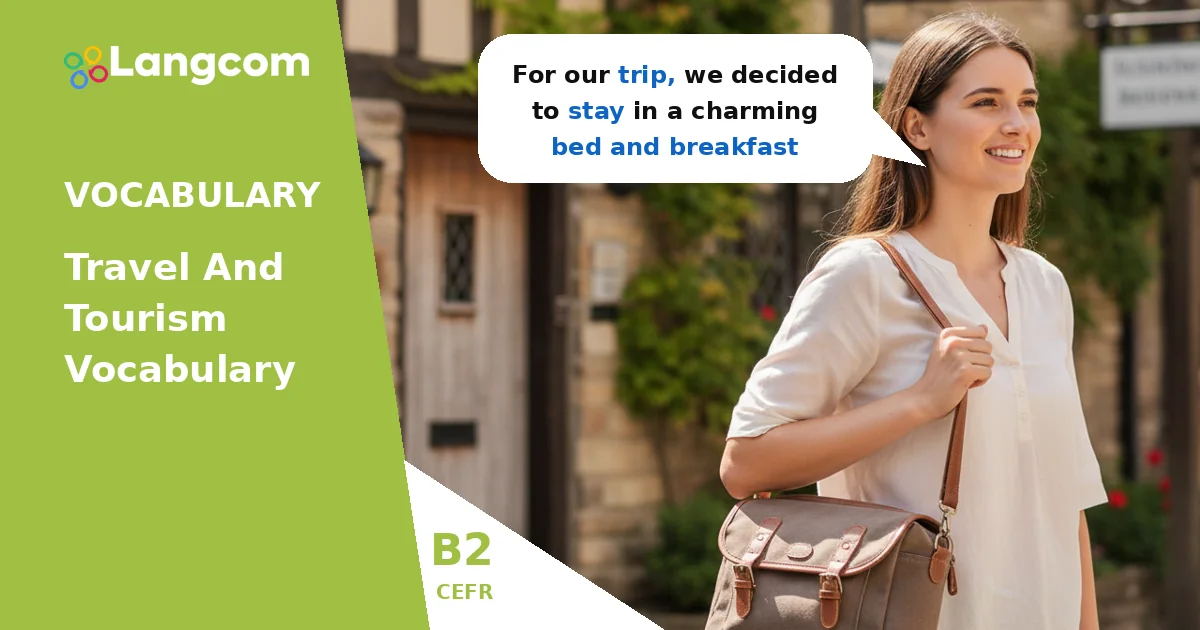
We stayed at a charming bed and breakfast by the sea.
-
Hostel: A hostel offers budget accommodation, often with shared dormitory rooms and common areas like kitchens or lounges. They are popular with young travellers.
The hostel had a great atmosphere, and I met many new friends.
-
Campsite: A campsite is an area, usually outdoors, where people can set up tents or park caravans and motorhomes. It’s ideal for those who enjoy nature.
We booked a pitch at a beautiful campsite near the mountains.
✍️ Not sure which level you are?
Take our free placement test and get personalized feedback from certified Cambridge examiners.
Take our FREE Placement TestHow do we talk about different ways to travel?
Getting from one place to another is a big part of travel. English has specific words for various modes of transport and related services.
-
Ferry: A ferry is a boat that transports passengers and often vehicles across a relatively short stretch of water, like a river, lake, or sea channel.
We took the ferry from Dover to Calais.
-
Coach: A coach is a comfortable, long-distance bus used for journeys between cities or for tourist tours. It’s different from a local city bus.
The coach journey from London to Edinburgh was long but scenic.
-
Yacht: A yacht is a luxurious boat, typically used for pleasure or racing, rather than for transport or work.
They sailed their private yacht around the Greek islands.
-
Flight: A flight is a journey made by an aircraft, especially a scheduled one. It refers to the act of flying.
Our flight to New York was delayed by two hours.
-
Airline: An airline is a company that provides regular flights for passengers and cargo.
Which airline are you flying with?
What vocabulary describes coastal areas?
Many holidays involve visiting coastal regions. Here are some specific terms for features you might find by the sea.
-
Harbour: A harbour is a place on the coast where ships and boats can shelter, often with docks for loading and unloading.
The fishing boats returned to the harbour as the storm approached.
-
Shore: The shore is the land along the edge of a sea, lake, or large river. It's a general term for the boundary between land and water.
We walked along the shore, collecting seashells.
-
Cliff: A cliff is a high, steep rock face, especially one that is found at the edge of the sea.
The white cliffs of Dover are famous.
Who helps us plan our trips and who travels?
Beyond places and transport, there are also specific words for people and services involved in travel.
-
Travel agent: A travel agent is a person or company that helps people plan and book their holidays, flights, and accommodation.
We asked the travel agent to find us a good package deal.
-
Holiday-makers: This term refers to people who are on holiday, enjoying a break from work or school.
The beach was full of holiday-makers enjoying the sun.
| Category | Word | Meaning |
|---|---|---|
| Accommodation | Bed and breakfast (B&B) | Small guesthouse with room and breakfast |
| Accommodation | Hostel | Budget accommodation, often with shared rooms |
| Accommodation | Campsite | Area for tents or caravans outdoors |
| Transport | Ferry | Boat transporting people/vehicles across water |
| Transport | Coach | Long-distance bus for intercity travel/tours |
| Transport | Yacht | Luxurious boat for pleasure/racing |
| Transport | Flight | Journey by aircraft |
| Travel Services | Airline | Company operating flights |
| Coastal Features | Harbour | Sheltered place for boats to dock |
| Coastal Features | Shore | Land at the edge of a sea/lake |
| Coastal Features | Cliff | High, steep rock face, often by the sea |
| People | Travel agent | Person/company arranging trips |
| People | Holiday-makers | People on holiday |
Examples
- For our trip, we decided to stay in a charming bed and breakfast instead of a large hotel.
- The cheapest option for accommodation was a hostel, which also offered a chance to meet other holiday-makers.
- We drove our campervan to a campsite right on the shore of the lake.
- To get to the island, you need to take a ferry, but if you prefer luxury, you could charter a yacht.
- The coach departed from the city centre, taking us directly to the airport for our flight.
- The airline had a great reputation, and our travel agent recommended them.
- We watched the ships enter the harbour from the top of the cliff.
Practice
Ready to earn your certificate?
Langcom prepares students for Cambridge, IELTS, TOEFL, DELE, SIELE and Michigan exams.
Get started with LangcomCommon mistakes for Spanish speakers
B2 learners often make mistakes by using general words instead of more precise ones. Here are some common pitfalls:
-
Confusing coach and bus: While both transport people, a coach is specifically for longer journeys or tours, offering more comfort. A bus usually refers to local public transport within a city or town.
INCORRECT: I took the bus from London to Paris.
CORRECT: I took the coach from London to Paris. -
Using hotel for all types of lodging: Remember that hostel and bed and breakfast are specific types of accommodation with distinct features. Using hotel when you mean a hostel can be misleading.
INCORRECT: We stayed in a cheap hotel with shared rooms.
CORRECT: We stayed in a cheap hostel with shared rooms. -
Generalising with boat instead of specific terms: While boat is correct, using ferry or yacht shows a richer vocabulary and more precise meaning.
INCORRECT: We crossed the sea on a big boat.
CORRECT: We crossed the sea on a big ferry.
Frequently asked questions
What is the main difference between a hostel and a hotel?
The main difference is cost and privacy. A hostel is typically much cheaper, offering shared dormitory rooms and communal facilities. A hotel usually provides private rooms with en-suite bathrooms and a wider range of services, often at a higher price.
Can I use 'coach' for any type of bus?
No, not for any type. A coach specifically refers to a comfortable bus designed for long-distance travel between cities or for tourist excursions. For local public transport within a town or city, you should use the word bus.
What does 'bed and breakfast' mean exactly?
A bed and breakfast (often shortened to B&B) is a type of accommodation where you rent a room for the night, and breakfast is included in the price. They are usually smaller, privately owned establishments, offering a more personal experience than a large hotel.
How is this vocabulary useful for the B2 First exam?
This vocabulary is very useful for the B2 First exam, especially in the Speaking and Writing papers. For example, in Part 2 of the Speaking test, you might need to describe pictures related to holidays, or in the Writing paper, you might write an email or an article about a travel experience. Using precise words like campsite, ferry, harbour, or holiday-makers will help you express yourself clearly and achieve a higher score.

0 Comments