por Raúl | Jul 14, 2026 | Inglés para principiantes (nivel A1)
The Past Simple positive form helps you talk about actions or events that started and finished in the past. It describes something that happened at a specific time and is now over. For most verbs, called ‘regular verbs’, you simply add -ed to the end of...
por Raúl | Jul 14, 2026 | Inglés para principiantes (nivel A1)
To talk about the past using the verb ‘to be’, we use was for singular subjects (I, he, she, it) and were for plural subjects (you, we, they). To make these negative, we add not, forming wasn’t or weren’t. For questions, we change the word...

por Raúl | Jul 14, 2026 | Inglés para principiantes (nivel A1)
The possessive ‘s shows who owns something or who a person is related to, while adverbs describe how, when, where, or how often an action happens. These two grammar points are fundamental for A1 English learners to build clearer and more descriptive sentences....
por Raúl | Jul 14, 2026 | Inglés para principiantes (nivel A1)
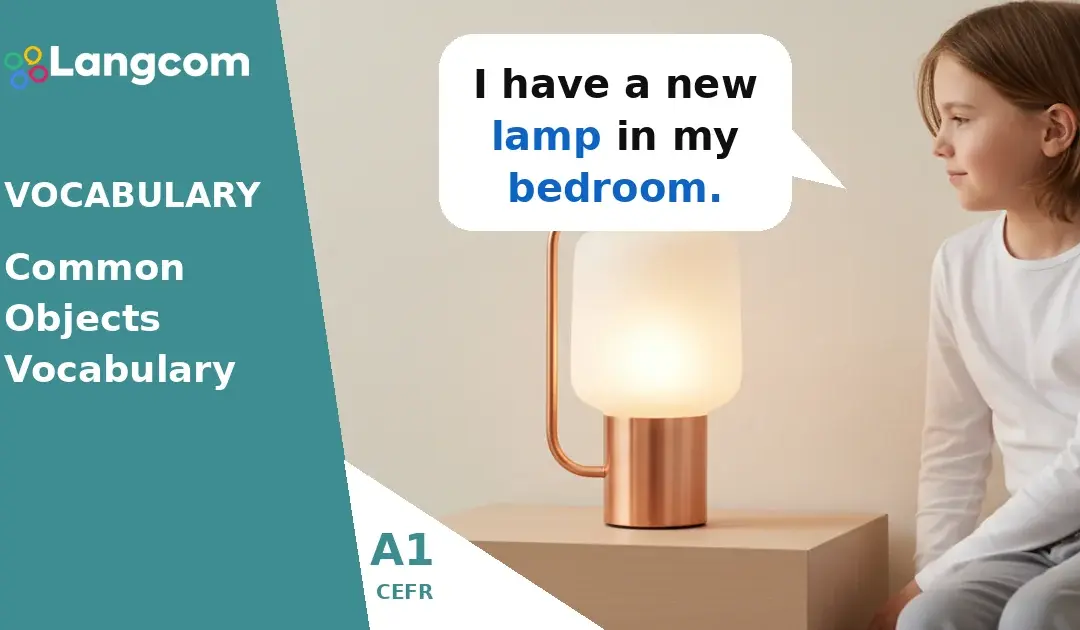
Learning the names of common objects helps you talk about your home and daily life in English. These are the things you see and use every day, like a chair, a table, or a lamp. Knowing these words is a great first step for A1 English learners. It allows you to...
por Raúl | Jul 14, 2026 | Inglés para principiantes (nivel A1)
Demonstratives are special words that help us point to things. They tell us if something is close to us or far away, and if there is one thing or many things. In English, we use this and these for things that are near the speaker. We use that and those for things that...
por Raúl | Jul 14, 2026 | Inglés para principiantes (nivel A1)
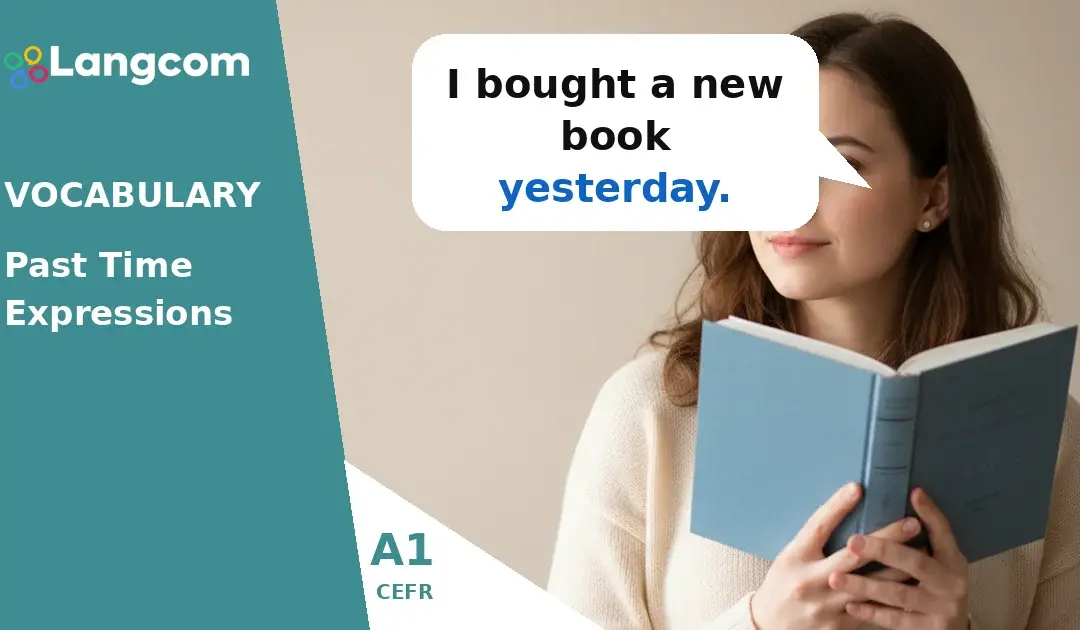
Past time expressions tell us when something happened in the past. They are very important for talking about events that are finished. At A1 level, you will learn common phrases like yesterday, last week, and two days ago. These expressions help you make simple...
