por Raúl | Jul 22, 2026 | Inglés para niños: nivel pre-A1 (principiantes)
To make a sentence negative in the Present Simple, we use don’t or doesn’t before the main verb. This is how we say that something is not true, or that we do not do an action regularly. We use don’t for subjects like I, you, we, and they. For...
por Raúl | Jul 22, 2026 | C1 Advanced Español
Past unreal conditionals describe imaginary situations in the past and their hypothetical results. At C1 level, you move beyond the basic ‘third conditional’ to explore more nuanced ways of expressing these ideas. This includes using continuous forms to...
por Raúl | Jul 22, 2026 | C1 Advanced Español
Advanced thought process verbs help you express complex ideas about thinking, judging, and deciding with greater precision in English. These C1-level words move beyond basic verbs like think or decide, allowing you to describe the specific nature of mental activity....
por Raúl | Jul 22, 2026 | A2 Inglés básico
Learning music vocabulary helps you talk about your favorite songs and artists in English. This lesson teaches you words for different kinds of music, such as pop, rock, and jazz. You will also learn words for people who make music or dance, like a singer, a musician,...
por Raúl | Jul 22, 2026 | A2 Inglés básico
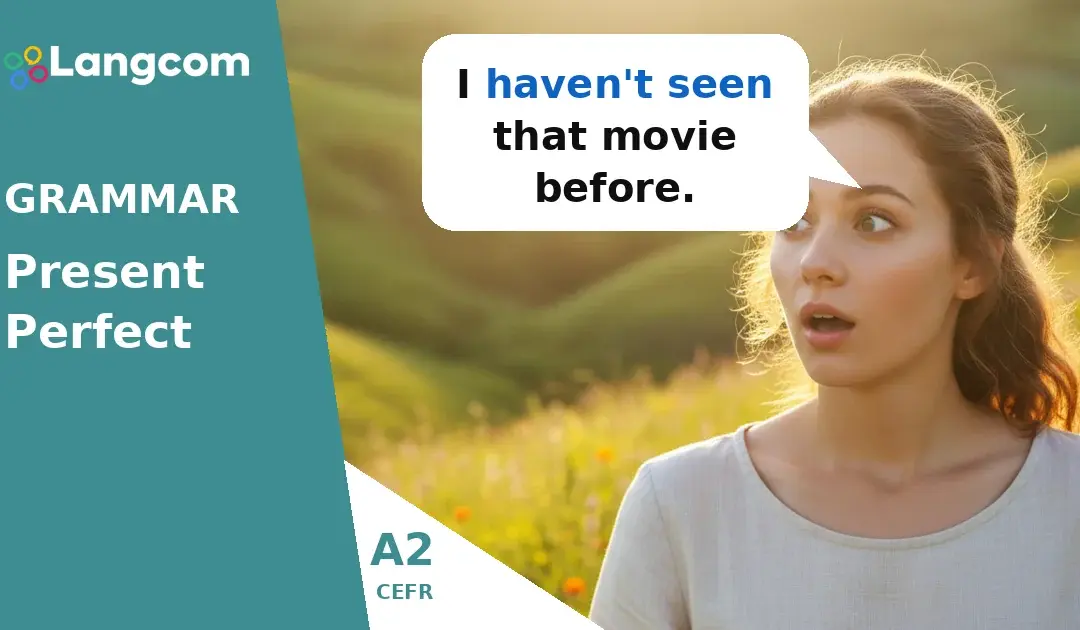
To make negative sentences and questions in the Present Perfect, you always use the auxiliary verb have or has with the past participle of the main verb. For negatives, place not after have/has, like in I haven’t finished my homework. For questions, put Have/Has...
por Raúl | Jul 22, 2026 | A2 Inglés básico
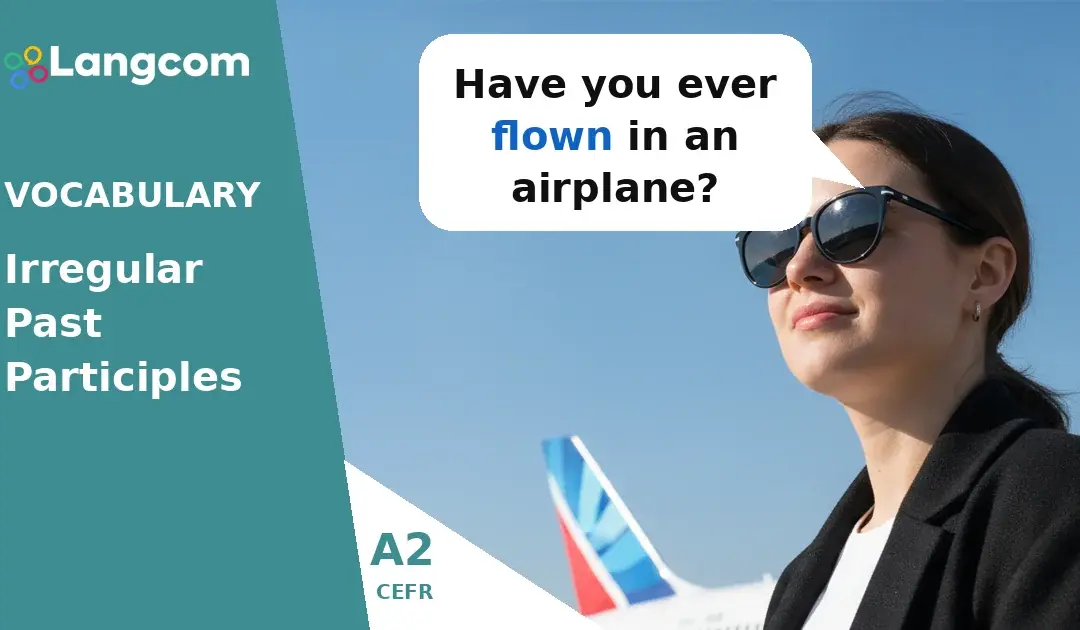
Irregular past participles are special forms of verbs that do not follow the normal rule of adding -ed to the base form. These verbs are essential for forming several important grammatical structures in English, such as the Present Perfect tense (e.g., I have eaten),...
