
par Raúl | Juil 19, 2026 | A1 Anglais pour débutants
We use be going to to talk about future plans and predictions. This grammar structure helps you express what you intend to do or what you think will happen very soon. It’s for things you have already decided or for things you see happening based on present...

par Raúl | Juil 19, 2026 | A1 Anglais pour débutants
To ask questions in the present simple, we use the helping verbs do or does at the beginning of the sentence. We use do for subjects like I, you, we, and they. For subjects like he, she, and it, we use does. After do or does and the subject, the main verb always stays...
par Raúl | Juil 19, 2026 | A1 Anglais pour débutants
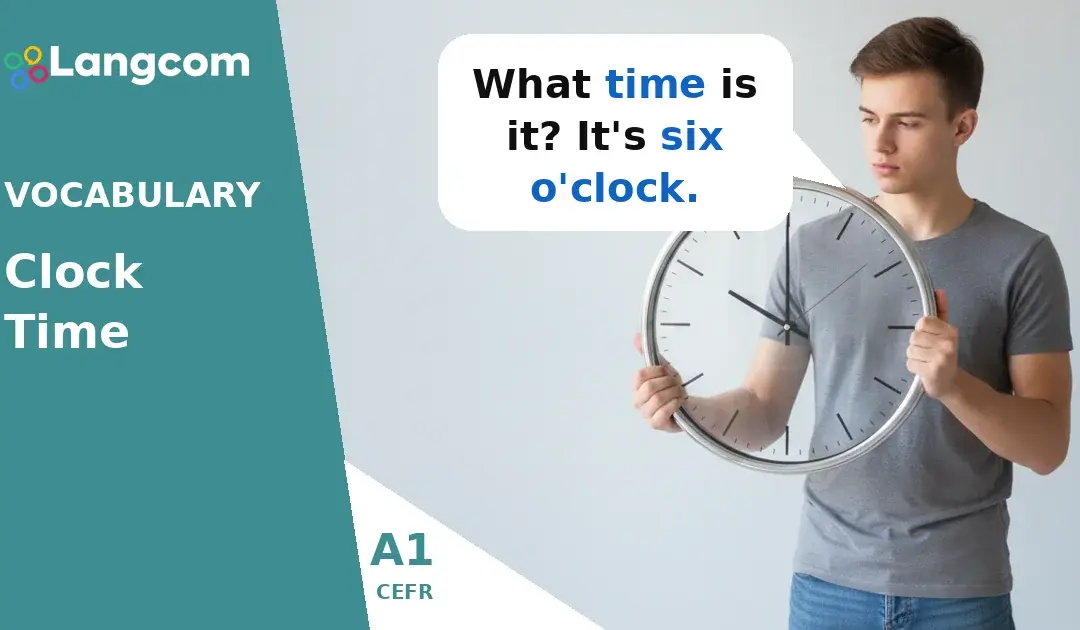
To tell time in English, you can use two main ways: the ‘past/to’ method or the simpler ‘digital’ method. The ‘past/to’ method uses words like past for minutes after the hour and to for minutes before the hour. For example,...
par Raúl | Juil 18, 2026 | A1 Anglais pour débutants
Learning basic English words for school and studying helps you talk about your classes and daily academic life. These words are very important for A1 learners. They help you understand what happens at school or university. For example, you will learn words like exam...

par Raúl | Juil 18, 2026 | A1 Anglais pour débutants
The Present Simple describes actions that happen regularly, habits, or general facts. It helps us talk about daily routines, things we do often, and universal truths. For positive sentences, we use the base form of the verb for I, you, we, they. For he, she, it, we...
par Raúl | Juil 18, 2026 | A1 Anglais pour débutants
Learning English words for jobs helps you talk about what people do every day and understand others when they speak about their work. In this lesson, you will learn eight common job names like doctor, nurse, chef, cook, vet, farmer, zoo keeper, and carer. Knowing...
