

Why is ‘Going To’ Pronunciation Important?
Many English learners find going to tricky. This is because it often sounds different from how it is written.
- Learning its common pronunciations helps you understand native speakers easily.
- It also helps you sound more natural and fluent when you speak English.
- For A2 Key exams, good pronunciation helps with listening and speaking tasks.
The Two Ways to Say ‘Going To’
There are two main ways to pronounce going to:
- The Full Pronunciation: This is how it looks when written. You say each word clearly.
- It sounds like /ˈɡoʊɪŋ tuː/.
- 例如 I am going to the shop. (Said slowly and clearly)
- The Reduced Pronunciation (Gonna): This is very common in everyday speech. The words blend together.
- It sounds like /ˈɡɒnə/ 或 /ˈɡʌnə/.
- 例如 I’m gonna go to the shop. (Said quickly and naturally)
"(《世界人权宣言》) gonna sound is a natural part of spoken English. It is not considered slang, but it is informal.
When to Use Each Pronunciation
Knowing when to use each pronunciation helps you communicate effectively.
- Use the full going to when:
- You are speaking slowly and carefully.
- You want to emphasize the words.
- In very formal situations (though going to itself is often informal).
- 例如 Are you really going to do that? (Emphasis)
- Use the reduced gonna when:
- You are speaking quickly and naturally.
- In most everyday conversations.
- In informal settings with friends and family.
- 例如 What are you gonna do tonight?
Most of the time, you will hear and use gonna in spoken English.
Tips for Practicing ‘Going To’
To improve your pronunciation of going to:
- Listen carefully: Pay attention to how native speakers say going to in movies, songs, and conversations.
- Repeat aloud: Practice saying sentences with both the full and reduced forms. Try to imitate the rhythm.
- Don’t be afraid to use gonna: In informal settings, using gonna will make your English sound more natural.
- Focus on understanding first: Even if you don’t use gonna all the time, recognizing it is important for listening comprehension.
| 发音 | Sound | Usage |
|---|---|---|
| Full | /ˈɡoʊɪŋ tuː/ | Slower speech, emphasis, more formal (less common) |
| Reduced (Gonna) | /ˈɡɒnə/ 或 /ˈɡʌnə/ | Fast, natural conversation, informal (very common) |
示例
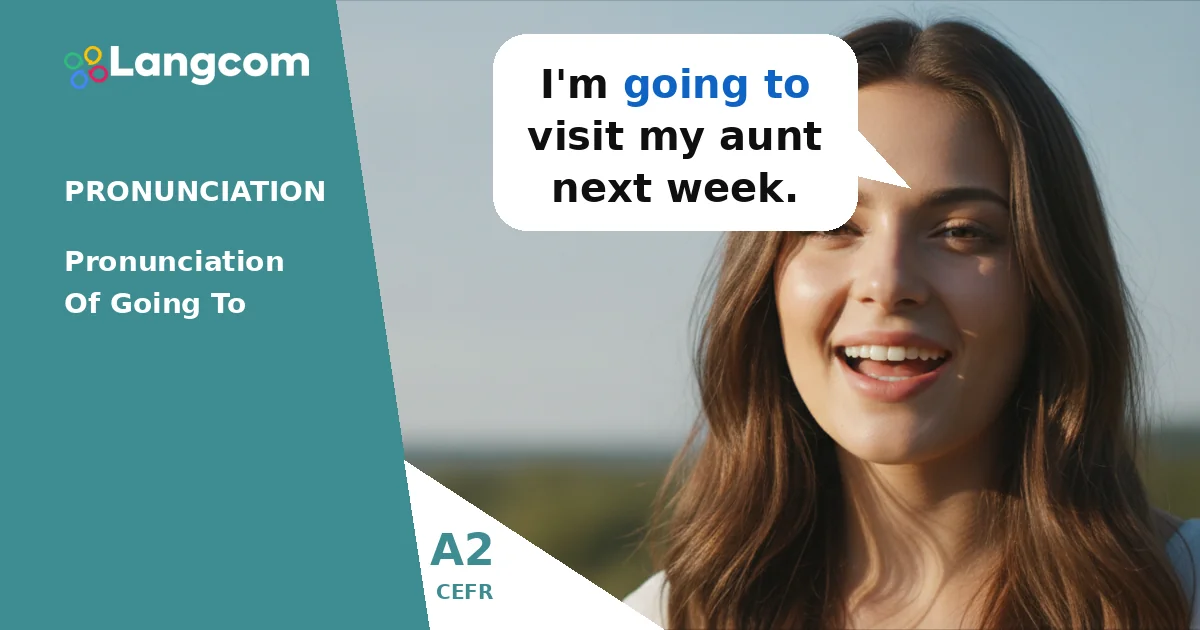
- I’m going to visit my aunt next week.
- She’s gonna be late for the meeting.
- Are they going to buy a new car?
- What are you gonna eat for dinner?
- It’s going to rain soon, look at the clouds!
- We’re gonna have a party this weekend.
练习
西班牙语母语者常犯的错误
Spanish speakers often pronounce every word clearly, including small words like to. In English, these words are often reduced, especially in fast speech.
- Mistake: Over-pronouncing to 在 going to, making it sound like I am going-TO go.
- Correction: Let the to sound be very short, like /tə/, or blend it completely into gonna.
- Correct Example: I’m gonna watch a film tonight. (Sounds natural)
- Incorrect Example: I am going TO watch a film tonight. (Sounds unnatural or overly formal in casual speech)
常见问题
Is ‘gonna’ correct English?
是的,, gonna is correct and very common in spoken, informal English. It is a natural reduction of going to. However, you should avoid using gonna in formal writing.
Will I sound rude if I use ‘gonna’?
No, you will not sound rude. In most informal conversations, using gonna sounds natural and helps you blend in with native speakers. It’s only in very formal situations or written English that you might prefer going to.
How can I practice this pronunciation for the A2 Key exam?
For the A2 Key exam, focus on both listening and speaking. Practice listening to how going to is pronounced in different contexts. When speaking, try to use the natural, reduced gonna sound in informal answers to sound more fluent. The exam’s listening section will often feature this reduced form.

0 条评论